
Last Updated on October 2, 2025 by recipeinspire
Table of Contents
Vegan Stuffing Recipe Perfect for Holiday Meals
A vegan stuffing recipe can make a holiday meal just as special without any animal products. It uses simple ingredients like bread, fresh herbs, vegetables, and vegetable broth to create a savory, satisfying side dish. Vegan stuffing offers the same rich flavors and comforting texture as traditional stuffing but without eggs or butter.
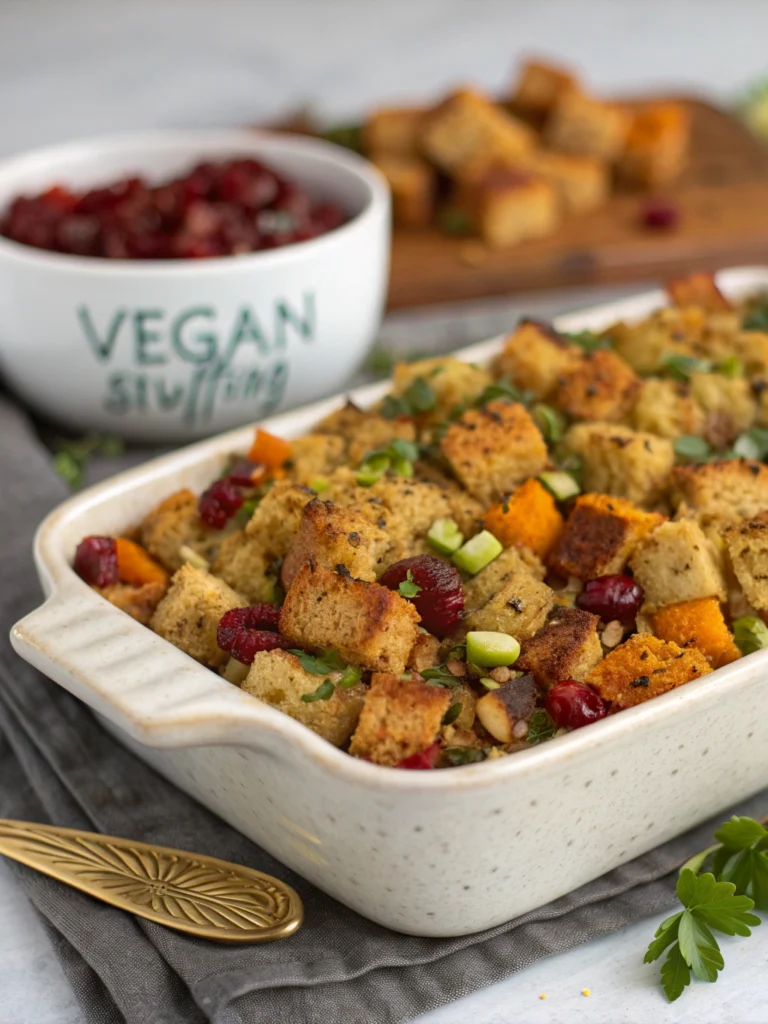
This recipe often includes staples such as celery, onion, garlic, and a mix of herbs like sage and thyme. The moisture comes from vegetable broth and sometimes olive oil or vegan butter, which help keep the stuffing soft and flavorful. Many find it easy to prepare and versatile, with options to customize flavors or add nuts and fruits for extra texture.
Vegan stuffing works well for Thanksgiving or any holiday meal and can be baked in the oven or cooked in a slow cooker. It is a crowd-pleaser and can be made ahead of time without losing its taste or texture.
Key Takeways
- Vegan stuffing mimics classic flavors using plant-based ingredients.
- Simple herbs and broth keep the stuffing moist and tasty.
- It can be prepared in advance and suits various cooking methods.
What Makes Vegan Stuffing Unique
Vegan stuffing differs mainly in its ingredients and texture. It avoids animal products like eggs and butter, relying instead on plant-based alternatives. This shift changes how the dish is prepared and its nutritional profile.
Key Differences from Traditional Stuffing
Traditional stuffing usually contains eggs, butter, and sometimes meat broth. Vegan stuffing replaces these with ingredients such as vegetable broth, olive oil, or vegan butter. These swaps create a similar moist texture without using animal products.
To mimic the binding effect of eggs, some recipes add nuts like pecans or use cooked vegetables to hold the mixture together. Fresh or dried herbs are often used to boost flavor and replace richness from dairy.
Bread cubes are a core ingredient in both versions. However, vegan stuffing often uses crusty bread for better texture, balancing crispiness and softness. The double addition of vegetable broth during cooking helps achieve the right moisture without sogginess.
Benefits of Choosing Plant-Based Ingredients
Plant-based ingredients make vegan stuffing lower in cholesterol and saturated fat compared to traditional recipes. This can benefit heart health and digestion.
Using vegetables, nuts, and herbs increases the vitamin, mineral, and fiber content of the stuffing. It also makes the dish more suitable for people with dairy or egg allergies.
A vegan version can be enjoyed by more people, including those following a vegan or vegetarian diet. It also supports ethical and environmental choices by avoiding animal products while keeping the classic holiday flavor.
Essential Ingredients for Vegan Stuffing
Vegan stuffing relies on a few core components to create its classic texture and flavor. The choice of bread impacts both taste and structure. The broth and liquids add moisture and depth. Fresh herbs bring aroma and complexity, while vegetables lend extra flavor and nutrition.
Best Bread Choices
The bread is the base of vegan stuffing. It should be sturdy enough to hold moisture without becoming mushy. Day-old or slightly stale bread works best because it soaks up liquids well.
Good options include sourdough, baguette, or a country-style loaf. These types of bread have a firm crust and open crumb structure, which helps maintain texture after baking.
For gluten-free diets, specialty gluten-free breads, such as gluten-free sourdough or baguettes, are suitable. The bread should be cut into cubes of about 1-inch to ensure even cooking.
Toasting or drying the bread cubes before mixing helps prevent sogginess. This step makes sure the bread holds its shape and absorbs flavor evenly.
Plant-Based Broth and Liquids
Plant-based broth provides the essential savoriness in vegan stuffing. Vegetable broth made from simmered onions, carrots, celery, and herbs adds rich umami without meat.
It is important to choose a broth that is low in salt to control the seasoning of the stuffing. Homemade broth or a good-quality store-bought option works well.
Water or unsweetened plant milk can be added to adjust moisture but should be used sparingly to avoid a watery texture.
Some recipes include a splash of apple cider, white wine, or soy sauce for extra depth and balance. These should be added carefully and in moderation.
Fresh Herbs and Seasonings
Fresh herbs are crucial for flavor. Traditional choices include sage, thyme, rosemary, and parsley. These herbs lend an earthy, aromatic quality that makes stuffing taste familiar and comforting.
Using fresh herbs rather than dried generally gives a brighter, fresher flavor. However, dried herbs can be used if fresh is not available, but they should be added in smaller amounts.
Salt and black pepper are essential for balancing flavors. Garlic and onion powder enhance savory notes without overwhelming.
A small pinch of ground nutmeg or smoked paprika can add warmth and complexity but should be subtle.
Vegetable Add-Ins
Vegetables add flavor, texture, and color to vegan stuffing. Classic choices are celery, onion, and carrots, which bring a mild sweetness and crunch.
Some recipes include mushrooms for an earthy taste and meaty texture. Chopped nuts like walnuts or pecans add crunch and richness.
Other options include diced bell peppers, zucchini, or cooked sweet potatoes to vary flavor and increase nutrients.
Vegetables should be sautéed before mixing to soften them and bring out their taste. This step helps maintain a balanced texture in the finished stuffing.
How to Prepare Vegan Stuffing
Preparing vegan stuffing involves careful layering of flavors and textures. It requires the right balance of bread, vegetables, herbs, and broth. Using good equipment and following simple techniques helps achieve a tasty and well-textured dish.
Step-by-Step Instructions
Start by chopping onions, celery, and garlic finely. Sauté them in a pan with a small amount of oil or vegan butter until soft and fragrant. Next, add fresh herbs like sage, thyme, and rosemary to build flavor.
Cut day-old crusty bread into cubes and toast lightly in the oven to prevent sogginess. Combine the toasted bread with the cooked vegetables in a large bowl. Slowly pour in warm vegetable broth, stirring gently until the bread is moist but not drowning.
Transfer the mixture into a baking dish. Cover with foil and bake at 350°F (175°C) for about 30 minutes. Uncover in the last 10 minutes to let the top become crispy.
Recommended Equipment and Tools
A large skillet or frying pan is essential for cooking the vegetables evenly. Use a sharp knife and cutting board for chopping ingredients precisely. A measuring cup helps pour the correct amount of broth to avoid a soggy mix.
A sturdy baking dish keeps the stuffing in shape while baking. Aluminum foil covers the dish well during baking to keep moisture in. A mixing bowl large enough to hold all ingredients makes tossing easier.
Using an oven thermometer ensures the temperature stays consistent. A spatula or wooden spoon will help stir without breaking up the bread too much.
Tips for Perfect Texture
Use stale or day-old bread because it absorbs broth better without becoming mushy. Toasting bread cubes first helps maintain a slightly crispy texture. Add broth little by little; too much can make the stuffing soggy.
Include nuts like toasted pecans or walnuts for extra crunch. Avoid overmixing to keep the bread pieces intact. Bake covered at first to steam the center, then uncovered to crisp the edges.
Choosing fresh herbs and quality vegetable broth improves both flavor and texture. Non-dairy butter can add richness without heaviness.
Flavor Variations and Creative Twists
Vegan stuffing can be customized in many ways to suit different diets and tastes. Adjusting ingredients allows for gluten-free meals, adding texture with nuts and fruit, or experimenting with bold spice and herb blends.
Gluten-Free Options
For those avoiding gluten, using gluten-free bread is essential. Day-old gluten-free bread works best because it absorbs moisture without becoming mushy. Some prefer to toast the bread pieces lightly before mixing to enhance texture.
Alternative grains like cooked quinoa or wild rice can replace bread entirely. These add substance and a different mouthfeel while keeping the dish gluten-free.
Soy sauce or tamari can add umami flavor, but it’s important to select gluten-free tamari if needed. Vegetables like celery, onions, and mushrooms still form the flavor base.
Nutty and Fruity Additions
Nuts and dried fruits offer texture and natural sweetness, balancing savory flavors. Pecans, walnuts, or chestnuts are popular choices, giving a crunchy contrast.
Dried cranberries, raisins, or chopped apples bring a fruity brightness. These additions work well with traditional herbs and create a more complex taste.
For even more contrast, combine nuts and fruits in a ratio of about 1:1 with the bread. Lightly toasting nuts before adding deepens their flavor.
Spice and Herb Combinations
Classic herbs like sage, rosemary, and thyme remain favorites. They provide a familiar aroma and highlight the stuffing’s traditional roots.
To add warmth, spices like smoked paprika or ground cumin can be mixed in. A pinch of nutmeg or cinnamon adds subtle depth, especially in fall-themed versions.
Fresh herbs provide brightness, while dried herbs offer intensity. Balancing garlic and onion powder enhances savory notes without overpowering the dish.
Serving Suggestions for Vegan Stuffing
Vegan stuffing works well with many plant-based dishes and can be arranged attractively for special occasions. It complements hearty main courses and fits neatly on a festive table.
Pairing with Vegan Mains
Vegan stuffing pairs well with dishes that have rich, savory flavors. It matches perfectly with lentil loaf, mushroom Wellington, or stuffed squash. These mains share similar spices and textures, creating a balanced meal.
Mashed potatoes or roasted vegetables add variety in texture and flavor. For extra moisture, vegan gravy made from vegetable broth and herbs complements the stuffing. The combination highlights the herbs and ensures the meal stays flavorful without meat.
Holiday Presentation Ideas
On a holiday table, vegan stuffing can be served in mini baking dishes or inside hollowed pumpkins for an eye-catching look. Garnishing with fresh herbs like parsley or thyme adds color and a fresh aroma.
Using rustic baskets lined with parchment paper or small ramekins makes serving more elegant. Placing the stuffing next to other festive sides like cranberry sauce and roasted Brussels sprouts creates a traditional festive vibe without animal products.
Storage and Make-Ahead Tips
Vegan stuffing can be prepared in advance and stored safely with proper care. It holds well in the fridge and freezer, allowing for flexible meal planning without loss of flavor or texture.
Reheating Instructions
To reheat vegan stuffing, preheat the oven to 350°F (175°C). Cover the stuffing with foil to keep moisture in and heat for about 20 minutes. If reheating a large portion, check in 5-minute intervals after 15 minutes to avoid drying out.
Microwave reheating is quick but may make the stuffing soggy. Use a microwave-safe dish, cover loosely, and heat in short bursts of 1 to 2 minutes, stirring in between to heat evenly.
Adding a tablespoon of vegetable broth before reheating helps restore moisture. Avoid overheating to keep the texture light and the flavors balanced.
Freezing and Defrosting
Vegan stuffing freezes well and keeps its taste when stored correctly. Place the cooled stuffing in an airtight container or heavy-duty freezer bag. Label with the date, and freeze for up to 3 months.
To defrost, transfer the stuffing to the fridge and let it thaw overnight. For faster defrosting, use the microwave’s defrost setting in short intervals, stirring occasionally.
Once thawed, reheat as described above. Avoid refreezing leftover stuffing to maintain quality and food safety. Proper freezing preserves the texture and herby flavor without drying or sogginess.
Print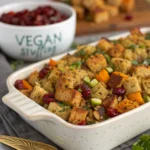
Vegan Stuffing
- Total Time: 40–45 minutes
- Yield: 6–8 servings 1x
- Diet: Vegan
Description
A classic vegan stuffing recipe packed with herbs, vegetables, and bread cubes, perfect for Thanksgiving or holiday dinners.
Ingredients
- 6 cups cubed day-old bread (use your favorite vegan bread)
- 2 tbsp olive oil
- 1 onion, diced
- 2 celery stalks, diced
- 2 cloves garlic, minced
- 1 carrot, diced
- 1 tsp dried sage
- 1 tsp dried thyme
- 1/2 tsp dried rosemary
- 1/2 tsp salt, or to taste
- 1/4 tsp black pepper
- 2 cups vegetable broth
- Optional: 1/2 cup chopped walnuts or pecans, 1/4 cup dried cranberries
Instructions
- Preheat oven to 350°F (175°C) and lightly grease a baking dish.
- In a large skillet, heat olive oil over medium heat. Sauté onion, celery, carrot, and garlic until softened.
- Add sage, thyme, rosemary, salt, and pepper. Stir to combine.
- In a large bowl, combine sautéed vegetables with cubed bread. Mix in optional nuts and cranberries if using.
- Gradually pour in vegetable broth until bread is moist but not soggy.
- Transfer mixture to prepared baking dish and bake for 25–30 minutes, until golden on top.
- Serve warm as a holiday side dish.
Notes
This stuffing can be made a day ahead and baked just before serving. Adjust herbs and seasoning to taste.
- Prep Time: 15 minutes
- Cook Time: 25–30 minutes
- Category: Side Dish
- Method: Sautéing / Baking
- Cuisine: Vegan / American
Nutrition
- Serving Size: 1 cup
- Calories: 180
- Sugar: 3g
- Sodium: 320mg
- Fat: 6g
- Saturated Fat: 0.5g
- Unsaturated Fat: 5.5g
- Trans Fat: 0g
- Carbohydrates: 28g
- Fiber: 3g
- Protein: 4g
- Cholesterol: 0mg
Keywords: vegan stuffing, plant-based stuffing, Thanksgiving vegan side, holiday stuffing, herb bread stuffing