

Last Updated on August 9, 2025 by recipeinspire
Table of Contents
Authentic Homemade Miso Soup: 7 Secrets to Exquisite Flavor!
Are you ready to tantalize your taste buds with an unforgettable experience? Did you know that miso soup is not only a delightful dish but also holds centuries of culinary tradition? As a staple in Japanese cuisine, this savory delight is loved for its rich flavors and health benefits. In this post, we will explore how to master Authentic Homemade Miso Soup with seven expert tips that will elevate your cooking skills and banish bland soups forever. Dive into the depths of umami and discover all the secrets to crafting this soul-soothing dish.
Ingredients List
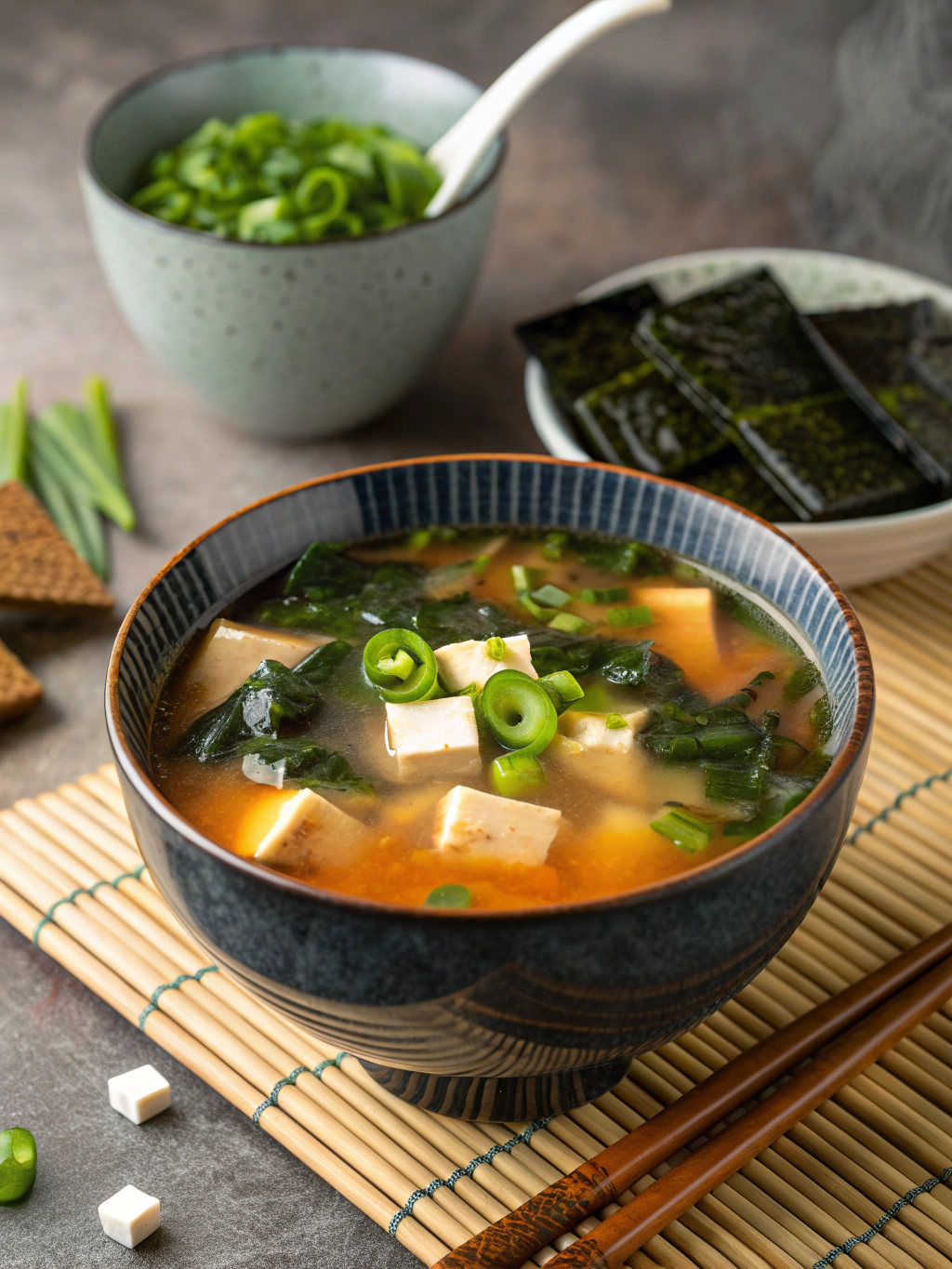
For the Authentic Homemade Miso Soup, you’ll need the following ingredients:
- 4 cups dashi (Japanese stock): Consider using kombu (kelp) and bonito flakes for traditional flavors or a vegetable stock for a vegetarian alternative.
- 3 tablespoons miso paste: Choose white, yellow, or red miso for varying taste profiles.
- 1 cup silken tofu: Cut into cubes; it adds creaminess and smooth texture.
- 1 cup sliced green onions: For garnish and a fresh bite.
- 1 cup seaweed (wakame): Hydrated and chopped, it adds depth and a hint of the ocean.
- Optional vegetables: Shitake mushrooms, carrots, or bok choy can elevate the soup’s nutritional profile and flavor.
Timing
Creating an amazing Authentic Homemade Miso Soup is efficient! Prep time is around 10 minutes, cooking takes another 10 minutes, leading to a total of just 20 minutes. This is significantly faster than many traditional recipes, giving you a delicious result without taking up your entire evening.
Step-by-Step Instructions
Step 1: Prepare the Dashi
Start by making your dashi. Simmer 4 cups of water with a piece of kombu for 10 minutes, then add a handful of bonito flakes and allow them to steep for 5 minutes before straining.
Step 2: Mix Miso Paste
In a small bowl, mix 3 tablespoons of miso paste with a ladle of hot dashi. Whisk until smooth, ensuring that there are no lumps. This step will prevent the miso from clumping in your soup.
Step 3: Combine and Heat
Pour the miso mixture back into the pot of dashi. Gently heat—do not boil, as boiling can kill the beneficial enzymes in miso.
Step 4: Add Tofu and Seaweed
Introduce 1 cup of cubed silken tofu and 1 cup of rehydrated wakame. Let them heat through for about 3 minutes.
Step 5: Garnish
Finish the soup by adding sliced green onions. Stir gently and take off the heat.
Step 6: Serve
Ladle your Authentic Homemade Miso Soup into bowls and enjoy the warm, comforting flavors.
Nutritional Information
Enjoying a bowl of Authentic Homemade Miso Soup is not just a treat for your palate; it’s also a winning choice for your health. One serving contains approximately:
- Calories: 75
- Protein: 5g
- Fat: 3g
- Carbohydrates: 9g
- Fiber: 1g
Miso also provides probiotics beneficial for gut health, making it a nutritious addition to your meal rotation!
Healthier Alternatives for the Recipe
To boost the nutritional content of your Authentic Homemade Miso Soup:
- Incorporate vegetables: Add a variety of colorful vegetables like carrots, spinach, or tofu to enhance vitamins and fiber.
- Choose low-sodium miso: This can help manage salt intake without sacrificing flavor.
- Add grains: Throw in some cooked quinoa or brown rice for an extra dose of complex carbohydrates.
Serving Suggestions
To highlight your Authentic Homemade Miso Soup, consider these ideas:
- Serve with a side of sushi for a full Japanese dining experience.
- Pair with an Asian-inspired salad featuring sesame dressing to complement the soup’s umami flavor.
- Add a splash of chili oil for heat—perfect for those who enjoy a spicy kick!
Common Mistakes to Avoid
Avoid these common pitfalls when making Authentic Homemade Miso Soup:
- Boiling the miso: This destroys its beneficial probiotics. Always ensure you heat gently.
- Not hydrating the seaweed: Skip this step, and the texture will be unappealing—make sure to soak it first.
- Overloading with ingredients: Miso soup is about balance; too many ingredients can overshadow the signature flavor.
Storing Tips for the Recipe
If you’re lucky enough to have leftovers, store your Authentic Homemade Miso Soup in an airtight container in the fridge for up to three days. Reheat gently on the stove, adding a little water if it thickens too much.
Print
Authentic Homemade Miso Soup
- Total Time: 20 minutes
- Yield: 4 servings 1x
- Diet: Vegetarian
Description
Enjoy the comforting flavors of this Authentic Homemade Miso Soup, made with traditional dashi broth, fresh tofu, wakame seaweed, and umami-rich miso paste. A classic Japanese starter that’s simple and nourishing.
Ingredients
- 4 cups dashi broth (made from kombu and bonito flakes)
- 3 tbsp white or red miso paste
- 1/2 cup firm tofu, cubed
- 2 tbsp dried wakame seaweed
- 2 green onions, thinly sliced
- Optional: sliced shiitake mushrooms
Instructions
- Prepare dashi: Make dashi broth by soaking kombu in water and simmering with bonito flakes, then strain.
- Soak wakame: Rehydrate wakame seaweed in warm water for 5 minutes, then drain.
- Heat broth: Bring dashi broth to a gentle simmer over medium heat.
- Dissolve miso: In a small bowl, whisk miso paste with a little warm broth until smooth, then add back to the pot. Do not boil after adding miso.
- Add tofu and wakame: Gently stir in tofu cubes and wakame. Heat through gently.
- Serve: Garnish with sliced green onions and serve immediately.
Notes
Using homemade dashi makes the soup truly authentic. Avoid boiling after adding miso to preserve flavor and nutrients.
- Prep Time: 10 minutes
- Cook Time: 10 minutes
- Category: Soup
- Method: Stovetop
- Cuisine: Japanese
Nutrition
- Serving Size: 1 cup
- Calories: 55
- Sugar: 1g
- Sodium: 700mg
- Fat: 1g
- Saturated Fat: 0g
- Unsaturated Fat: 1g
- Trans Fat: 0g
- Carbohydrates: 7g
- Fiber: 1g
- Protein: 3g
- Cholesterol: 0mg
Keywords: authentic miso soup, homemade miso soup, traditional japanese soup, dashi miso soup
Conclusion
Now that you understand the secrets to making perfectly flavorful Authentic Homemade Miso Soup, it’s time to get cooking! With these tips and tricks in your back pocket, you can impress family and friends and enjoy a comforting bowl of rich, umami goodness. We invite you to try this incredibly rewarding dish, and don’t forget to share your thoughts or explore more delicious recipes on our blog.
FAQs
Can I make miso soup without dashi?
Absolutely! You can use vegetable broth or even plain water, but the depth of flavor may vary.
What’s the best type of miso for this soup?
White miso is milder and sweeter, while red miso offers a stronger flavor. Choose based on your taste preference!
How can I make this soup vegan?
Simply substitute fish-based dashi with a vegetable alternative and ensure your miso paste doesn’t contain any fish-derived ingredients.
Is miso soup gluten-free?
Many miso pastes are gluten-free, especially those made with rice. Always check labels if gluten is a concern.
With these insights and techniques, you’re well on your way to creating a delicious Authentic Homemade Miso Soup that satisfies all your cravings!